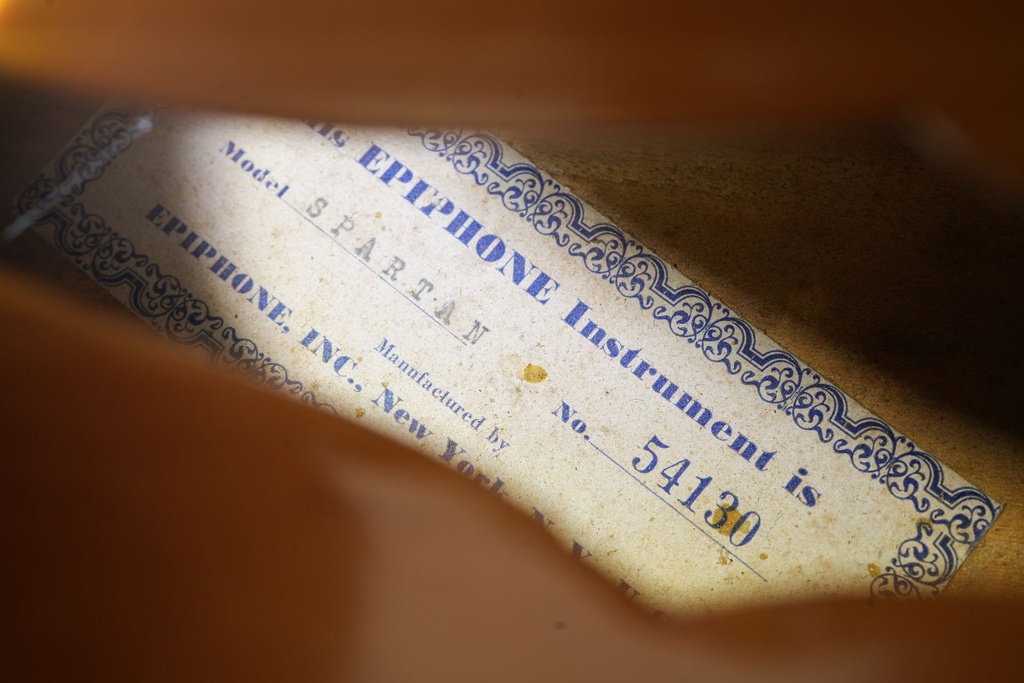
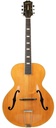
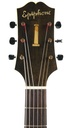
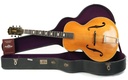
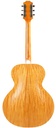
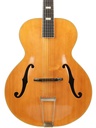
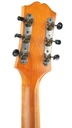
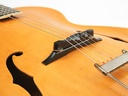
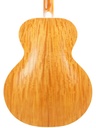
Epiphone Spartan 1946
€ 2.199,00 € 2.199,00
€ 2.199,00
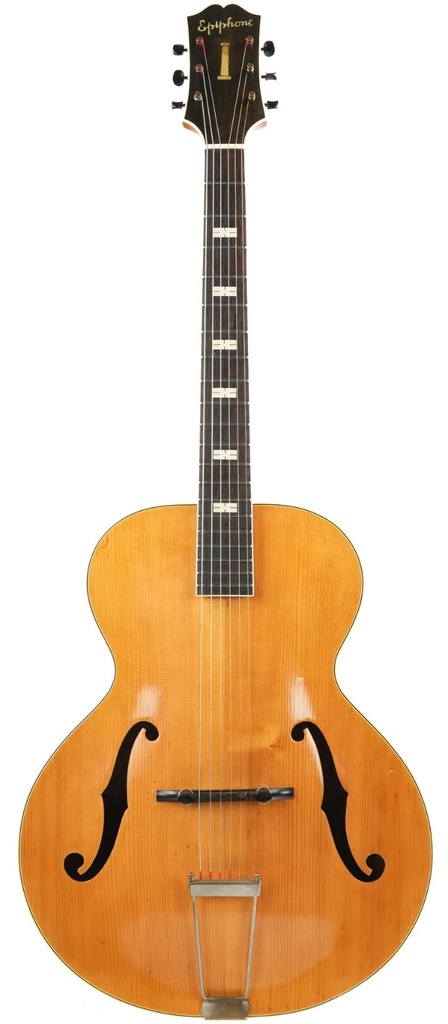
De Epiphone Spartan werd in 1934 geïntroduceerd als een verfijnde toevoeging aan Epiphones archtop-serie en onderscheidde zich door zijn elegante natuurlijke afwerking en luxueuze details.

Epiphone Spartan 1946
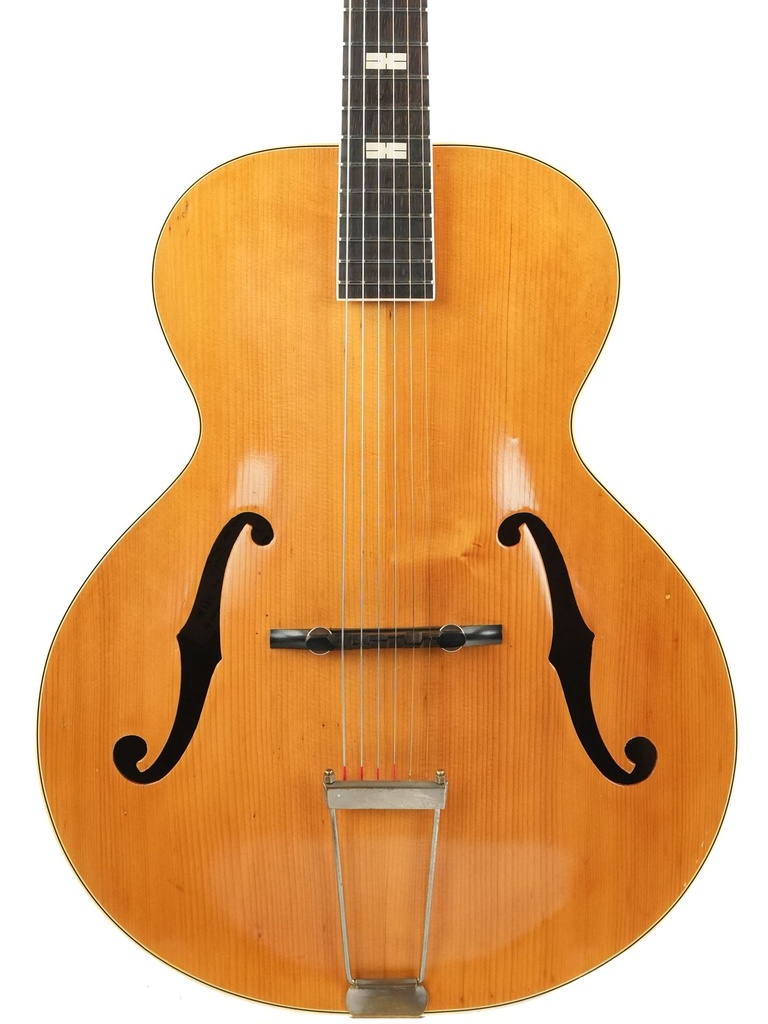
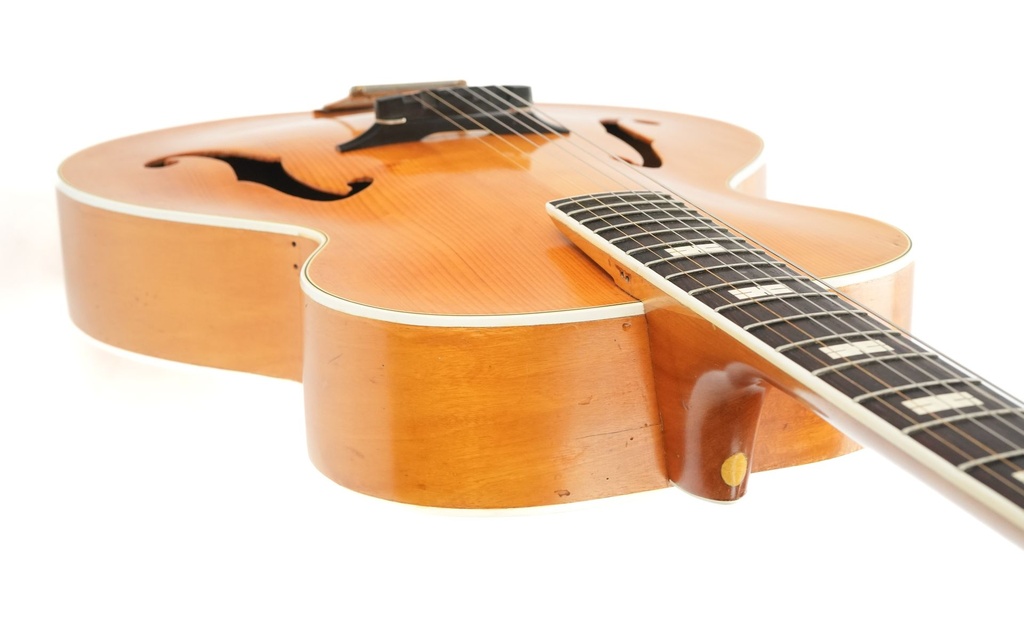
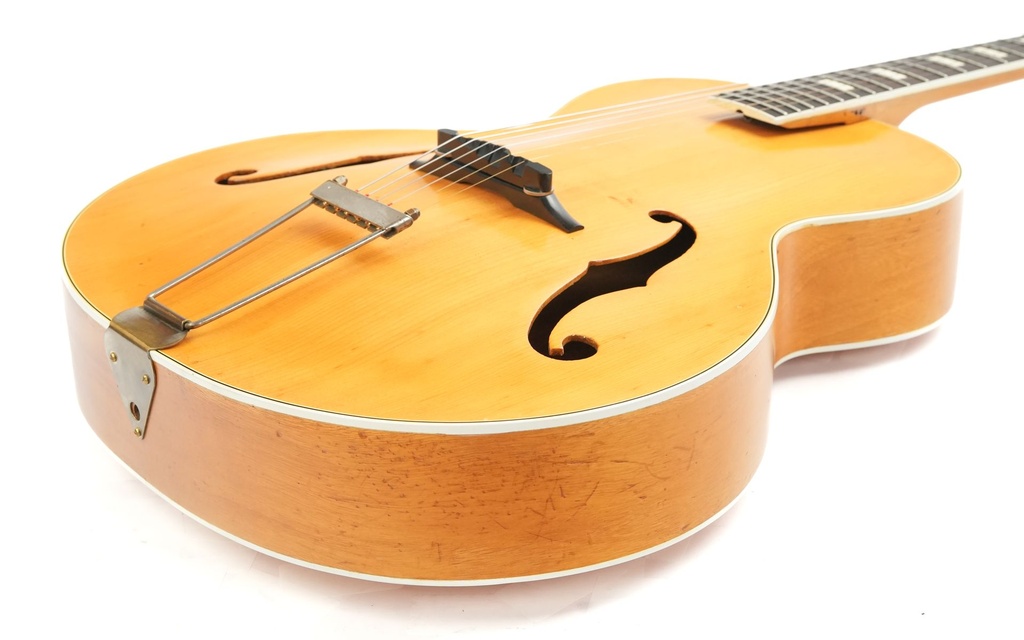
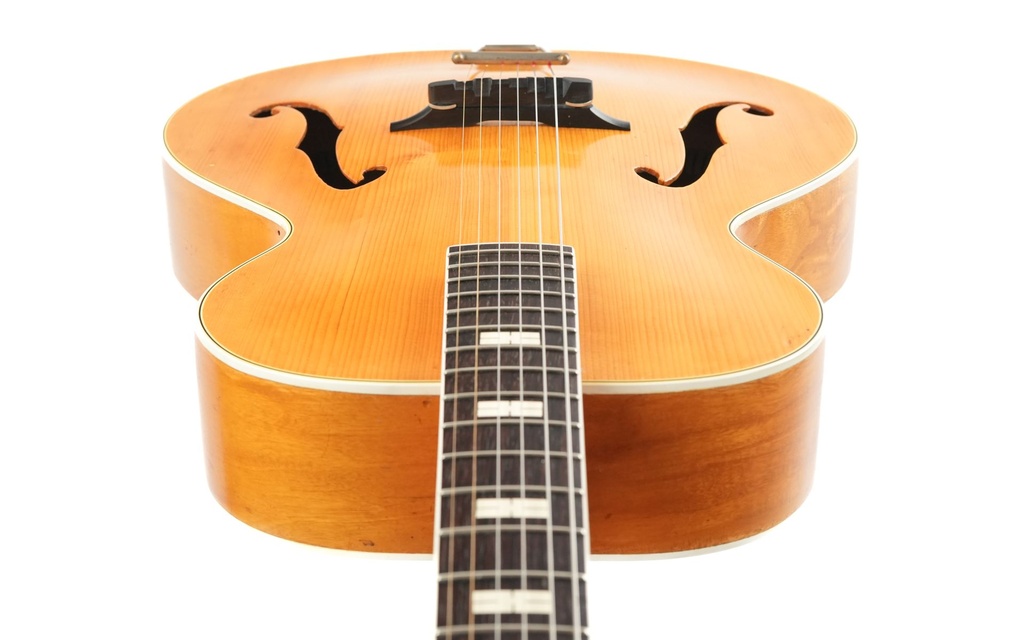
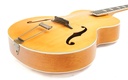
Met een body van 16,44 inch positioneerde de Spartan zich in het middensegment van de productlijn, maar beschikte desondanks over hoogwaardige kenmerken zoals cello-achtige F-gaten en witte, gekerfde blokinlays. Vernoemd naar de oude stad Sparta, straalde het model dezelfde kracht en elegantie uit. De Spartan werd geproduceerd tot 1950 en is nu een gewild model onder verzamelaars, met name de naoorlogse modellen die vlak voor de overname van Epiphone door Gibson werden gebouwd.
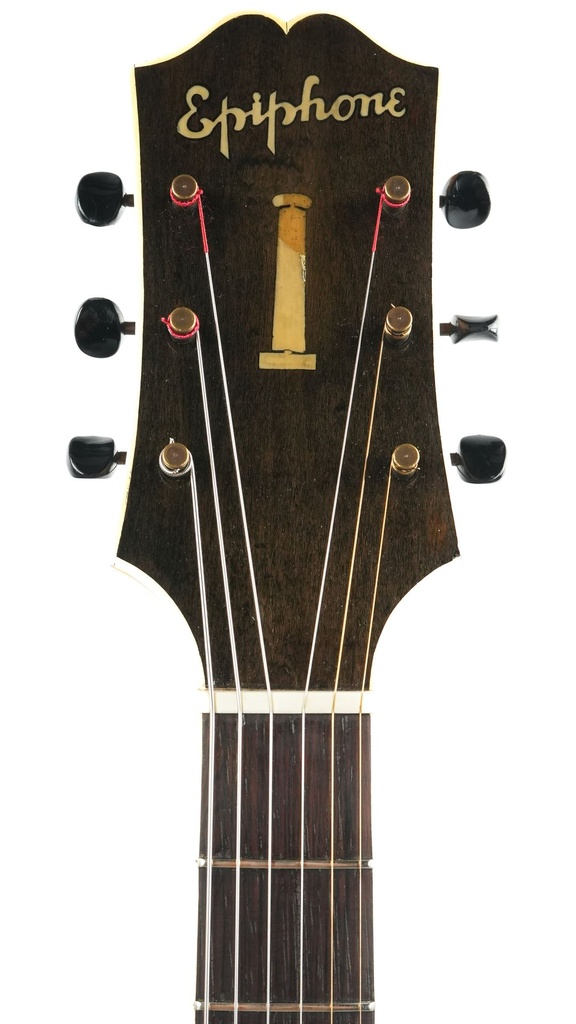
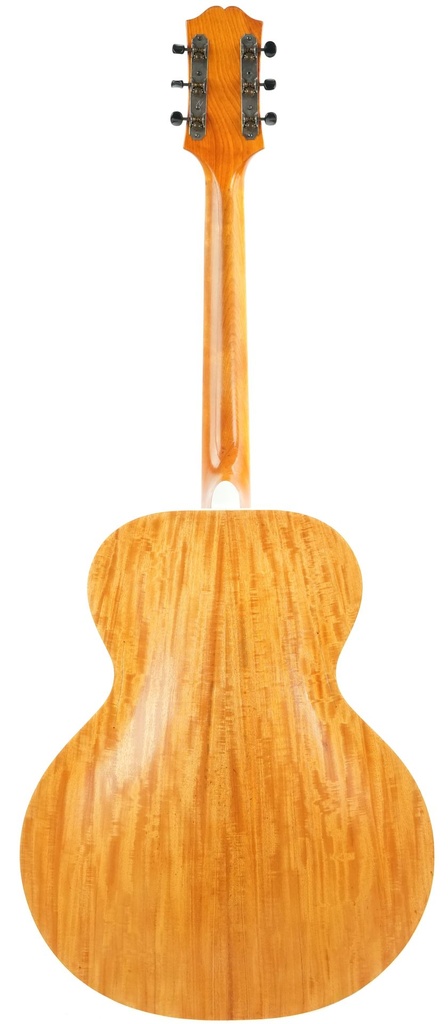
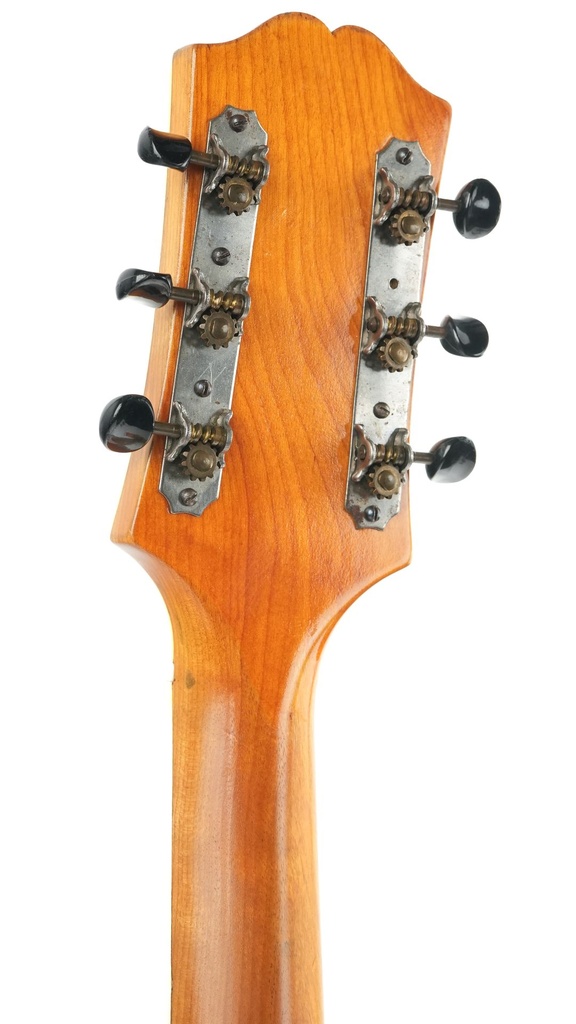
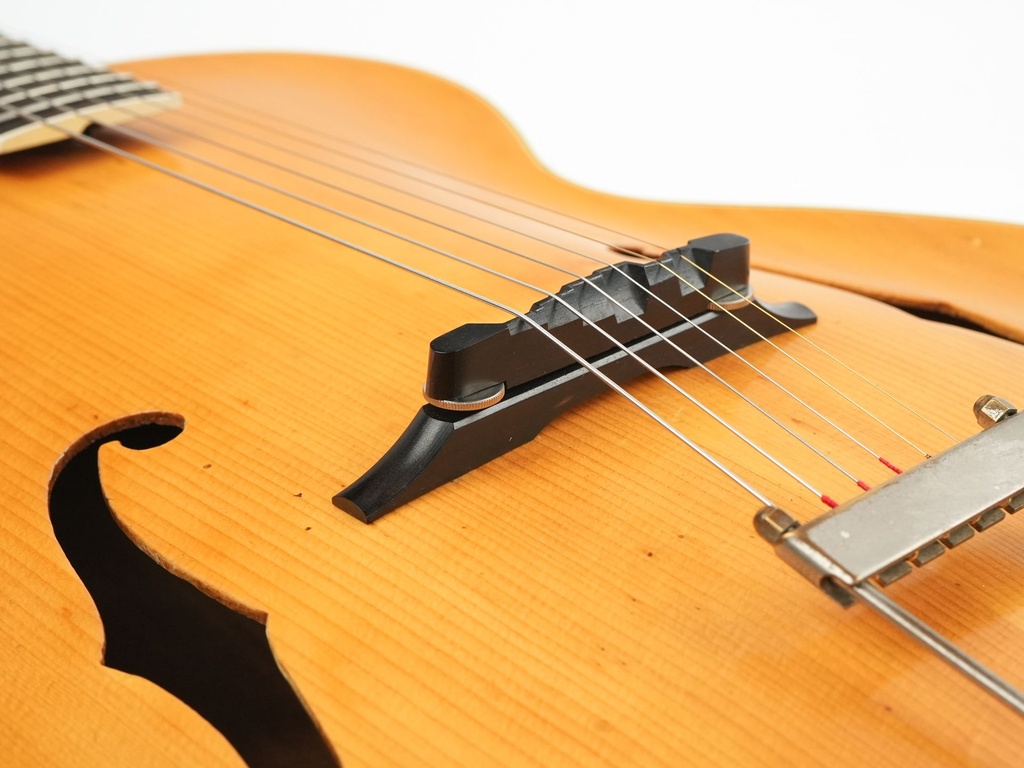
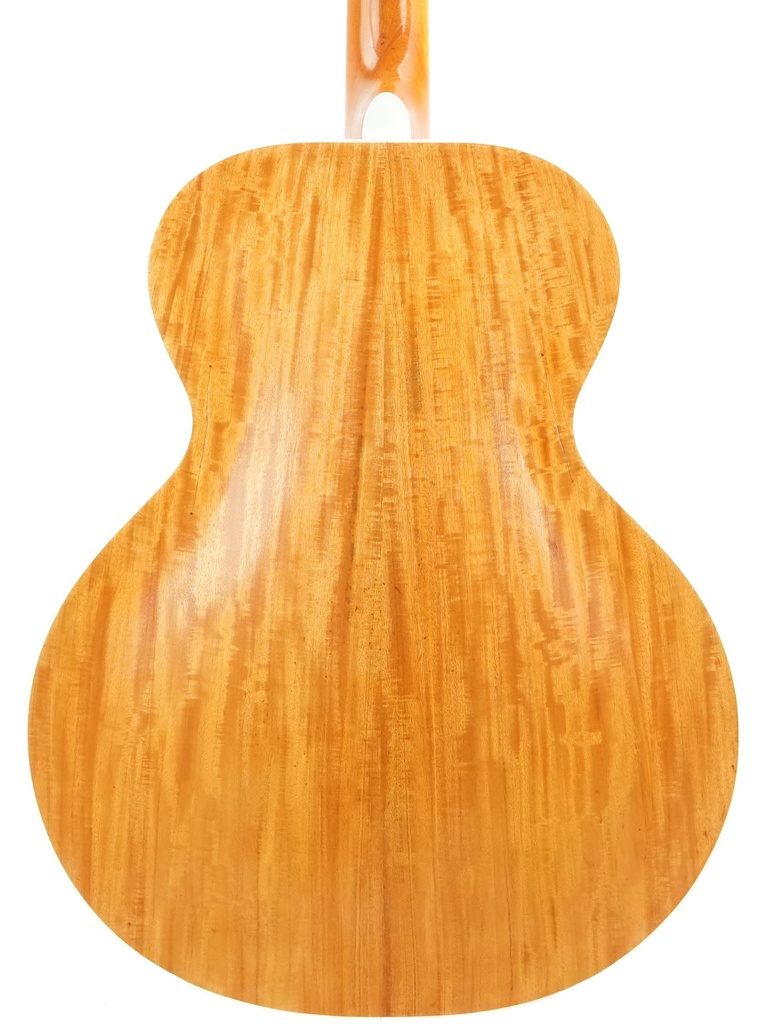
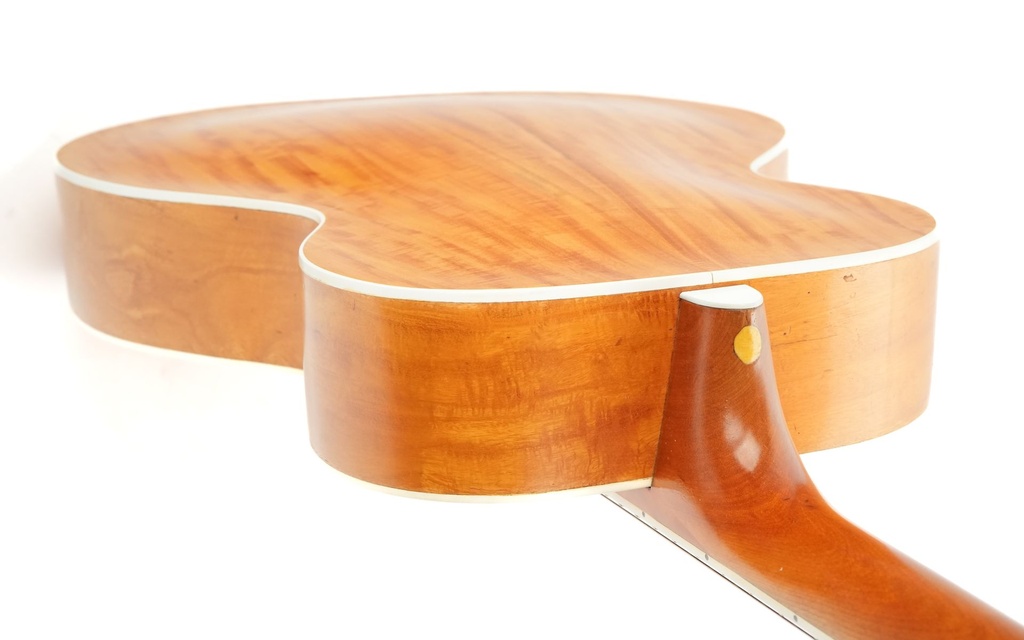
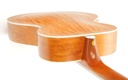
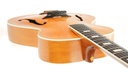
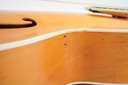
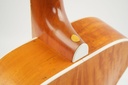
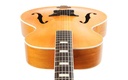
Deze Spartan uit 1946 is een prachtig voorbeeld van Epiphones naoorlogse productie. De gitaar heeft een achterblad en zijkanten van Primavera en een tweedelig gewelfd sparrenhouten bovenblad met een transparante nitrocellulose laklaag die de natuurlijke houtnerf prachtig laat zien. De mahoniehouten hals heeft een massief V-profiel met een samengestelde radius van 7,25" tot 9,5" op de palissander toets, die is voorzien van elegante witte inkepingen. De drievoudige zwart-witte binding op de body, gecombineerd met de cello-achtige F-gaten en de witte binding op de hals, geven de gitaar een verfijnde uitstraling. De verstelbare gecompenseerde ebbenhouten brug en het trapeziumvormige staartstuk maken de look compleet.
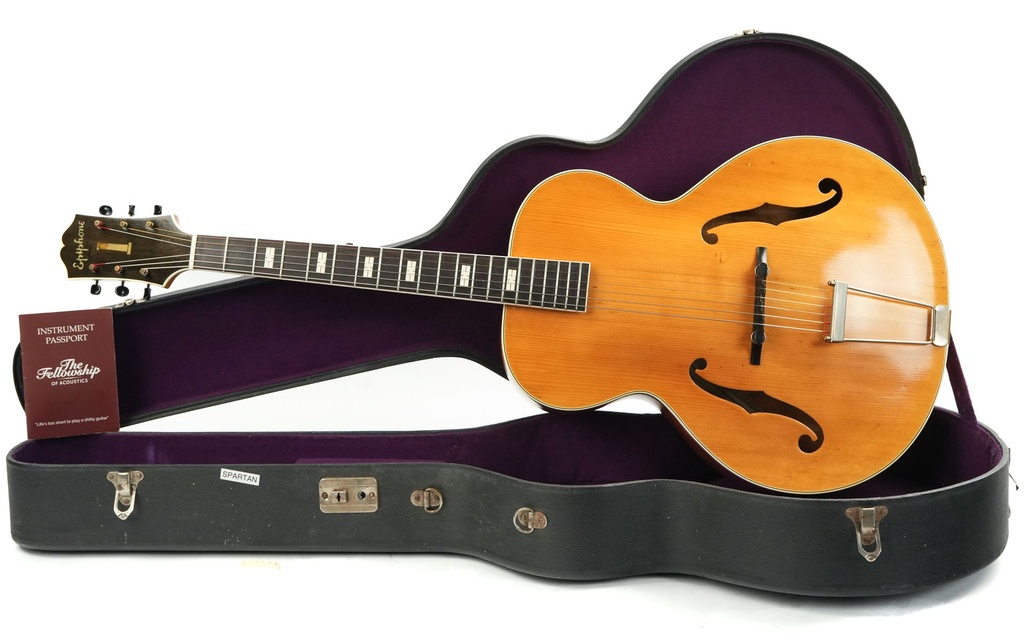
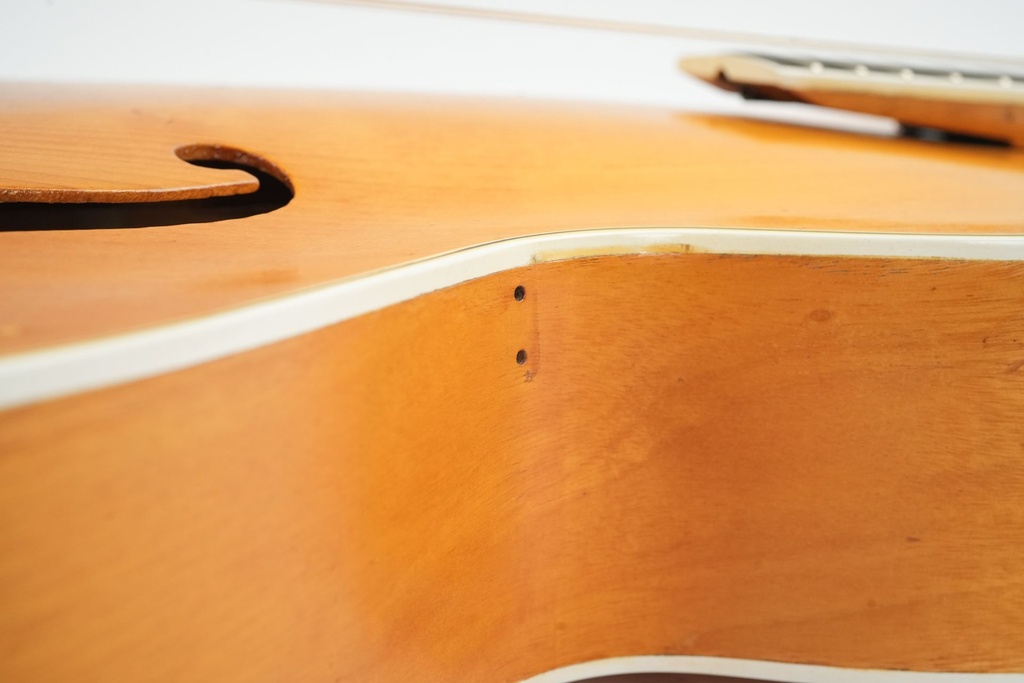
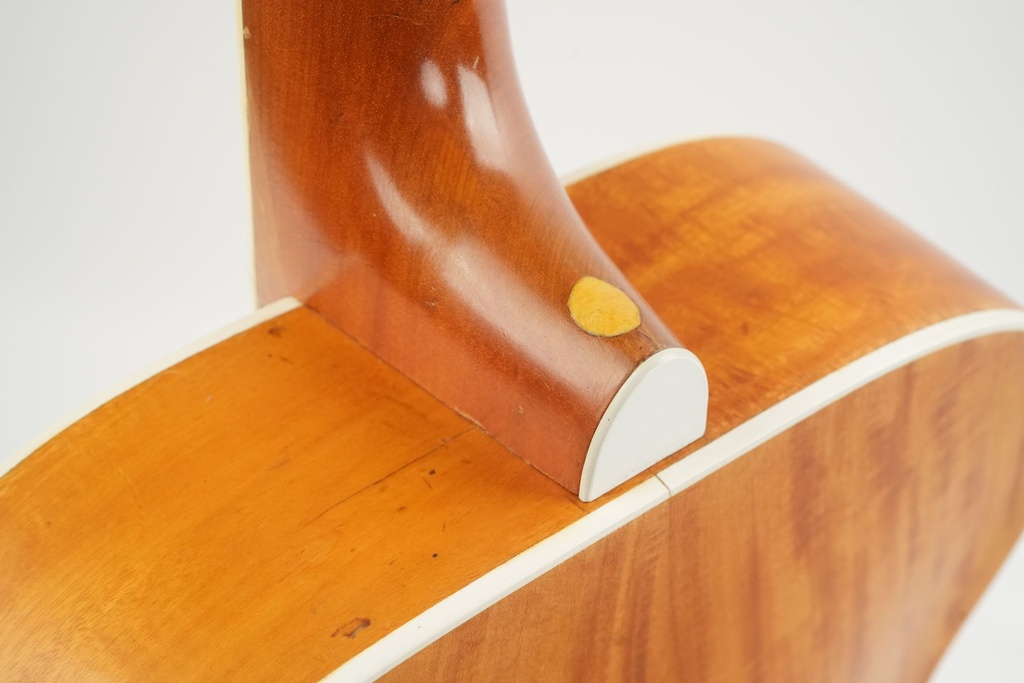
Deze Epiphone Spartan heeft in de loop der jaren aanzienlijke werkzaamheden ondergaan. De hals is opnieuw afgesteld en de frets zijn vervangen, de toets is geëgaliseerd en op sommige plaatsen opgevuld. De body is geschuurd en opnieuw gelakt, en zowel de brug als de topkam zijn vervangen. Ondanks deze aanpassingen verkeert de gitaar in zeer goede staat en biedt nog steeds een fantastische speelervaring. De gitaar werd in mei 2010 door het Dutch Archtop Museum gekocht van Randy Barnett, gitarist van de Second Chance Blues Band uit Wilmington, Delaware, en wordt geleverd in een hardcase.
Consignatie.
With its 16.44-inch body, the Spartan positioned itself in the mid-range segment of the product line, yet still boasted high-quality features such as cello-style F-holes and white notched block inlays. Named after the ancient city of Sparta, the model exuded the same strength and elegance. The Spartan was produced until 1950 and is now a sought-after model among collectors, particularly the postwar models built just before Epiphone's acquisition by Gibson.
This 1946 Spartan is a beautiful example of Epiphone's postwar production. The guitar features Primavera back and sides and a two-piece arched spruce top with a clear nitrocellulose finish that beautifully showcases the natural wood grain. The mahogany neck has a solid V-profile with a compound radius of 7.25" to 9.5" on the rosewood fingerboard, which features elegant white notched block inlays. The triple black and white binding on the body, combined with the cello-style F-holes and the white binding on the neck, give the guitar its refined appearance. The adjustable compensated ebony bridge and trapeze tailpiece complete the look.
This Epiphone Spartan has undergone considerable work over the years. It has had a neck reset and a refret, with the fingerboard leveled and filled at some places. The body was sanded and refinished, and both the bridge and nut were replaced. Despite these modifications, the guitar is in very good condition and retains a wonderful playing experience. The guitar was purchased by the Dutch Archtop Museum in May 2010 from Randy Barnett, guitarist in the Second Chance Blues Band from Wilmington, Delaware, and comes in a hardshell case.
Consignment.
Mit ihrem 16,44 Zoll (41,8 cm) großen Korpus positionierte sich die Spartan im mittleren Preissegment der Produktlinie und bot dennoch hochwertige Merkmale wie Cello-F-Löcher und weiße Blockeinlagen. Benannt nach der antiken Stadt Sparta, verkörperte das Modell dieselbe Stärke und Eleganz. Die Spartan wurde bis 1950 produziert und ist heute ein begehrtes Sammlerstück, insbesondere die Nachkriegsmodelle, die kurz vor der Übernahme von Epiphone durch Gibson gefertigt wurden.
Diese Spartan von 1946 ist ein wunderschönes Beispiel für Epiphones Nachkriegsproduktion. Die Gitarre verfügt über Boden und Zargen aus Primavera-Holz und eine zweiteilige, gewölbte Fichtendecke mit einem klaren Nitrozelluloselack, der die natürliche Holzmaserung wunderschön zur Geltung bringt. Der Mahagonihals besitzt ein solides V-Profil mit einem Compound-Radius von 7,25" bis 9,5" auf dem Palisandergriffbrett, das mit eleganten, weißen Blockeinlagen verziert ist. Die dreifache schwarz-weiße Einfassung des Korpus, kombiniert mit den F-Löchern im Cello-Stil und der weißen Einfassung des Halses, verleiht der Gitarre ihr edles Aussehen. Der verstellbare, kompensierte Ebenholzsteg und der Trapez-Saitenhalter runden das Gesamtbild ab.
Diese Epiphone Spartan wurde im Laufe der Jahre umfassend überarbeitet. Der Hals wurde neu eingestellt und die Bünde erneuert, das Griffbrett abgerichtet und an einigen Stellen aufgefüllt. Der Korpus wurde geschliffen und neu lackiert, und sowohl Steg als auch Sattel wurden ersetzt. Trotz dieser Modifikationen befindet sich die Gitarre in einem sehr guten Zustand und bietet ein hervorragendes Spielgefühl. Sie wurde im Mai 2010 vom Dutch Archtop Museum von Randy Barnett, Gitarrist der Second Chance Blues Band aus Wilmington, Delaware, erworben und wird in einem Hartschalenkoffer geliefert.
In Kommission.
Specificaties
| Merk en Conditie | |
|---|---|
| Merk | Epiphone |
| Conditie | Excellent |
| Hardware | |
|---|---|
| Brug | Adjustable Compensated Ebony |
| Brug Snaarafstand | 51 mm - 2" |
| Staartstuk | Trapeze |
| Stemmechanieken | Three-On-A-Plate |
| Body | |
|---|---|
| Body Formaat | Archtop |
| Kleurfamilie | Naturel |
| Finish | Transparent Nitrocellulose |
| Klankkast Breedte | 418 mm - 16.44" |
| Klankkast Diepte | 83 mm - 3.15" |
| Body Materiaal | Primavera |
| Bovenblad Materiaal | Two-Piece Carved Spruce |
| Body Details | 3-Ply Black/White Binding, Cello Style F-Holes |
| Hals | |
|---|---|
| Toets Materiaal | Rosewood |
| Toets Radius | 7.25" - 9.5" Compound Radius |
| Hals Details | White Binding, White Notched Block Inlay, Rosewood Headstock Overlay |
| Kambreedte | 42,9 mm - 1.69" |
| Mensuur | 648 mm - 25.5" |
| Hals Materiaal | Mahogany |
| Hals Profiel | V |
| Halsdikte 1ste Fret | 24,3 mm - 0.96" |
| Halsdikte 9de Fret | 26,2 mm - 1.03" |
| Elektronica | |
|---|---|
| Acoustic Pickup | Nee |
| Overig | |
|---|---|
| Reist in | Hardshell Case |
| Accessoires | TFOA Passport |
| Foto's van | Daadwerkelijk Instrument |
Wat andere klanten zeggen:
TFOA Gold Standard
Elk instrument met de perfecte setup bij jou thuisbezorgd. Dat is de TFOA Gold Standard!